Fact management
Case chronology software
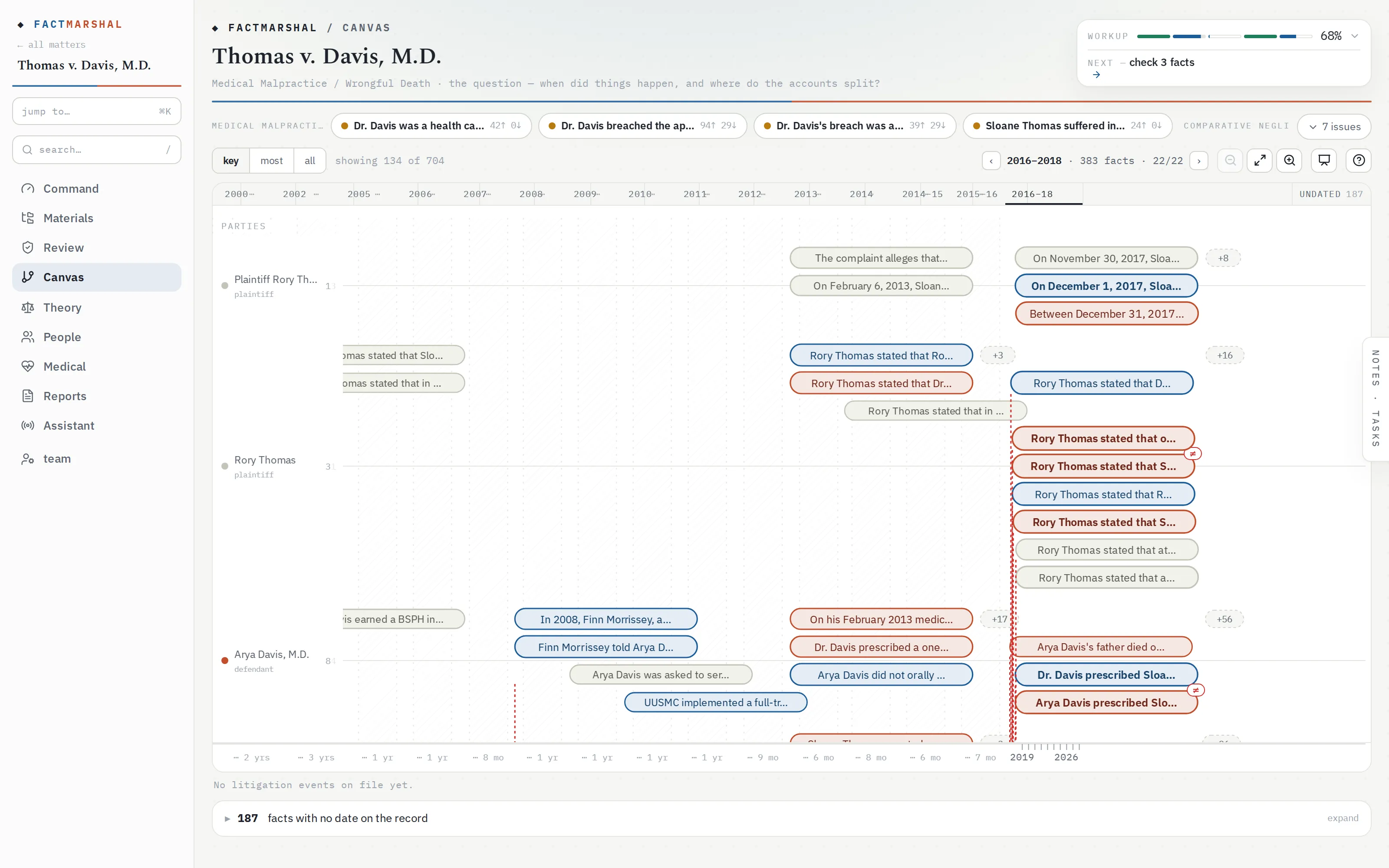
A case chronology is the backbone of litigation strategy: every material fact in date order, each tied to the document that proves it. Case chronology software builds and maintains that record from the case file itself — instead of a hand-tended spreadsheet that's out of date by the first deposition.
Why chronologies win cases
Sequence is argument. Who knew what, when — the treatment gap, the backdated memo, the injury that predates the accident — is where liability is won and credibility is lost. Teams that master the chronology depose with better questions, spot the contradiction before opposing counsel does, and walk into mediation knowing what the record actually supports. The problem has never been whether to build a chronology; it's that building one by hand across thousands of pages is brutal, and keeping it current is worse.
The spreadsheet, versus software built for the job
| Excel / Word chronology | FactMarshal | |
|---|---|---|
| Getting facts in | Typed by hand, one row at a time | Extracted from the file automatically, pinned to source pages |
| Citations | "See Ex. 12" — then go find it | Every entry opens to the exact page |
| Verification | Whoever typed it, hopefully | Verbatim facts machine-verified; the rest through a review queue |
| Contradictions | Noticed if someone remembers | Flagged automatically, side-by-side with both sources |
| New documents | Re-read, re-type, re-sort | Extracted and dated into place on upload |
| Collaboration | "chronology_v7_FINAL(2).xlsx" | One matter-level record with role-based access |
How FactMarshal builds the chronology
Upload the file — pleadings, medical records, transcripts, productions. FactMarshal splits and classifies the documents, extracts dated facts with citations, resolves entities across documents, and assembles the timeline. Gaps, clusters, and disputed dates become visible at a glance; every fact carries its verification status; and the same record powers the contradiction report and deposition outlines, so the chronology is never a side artifact — it's the case's working memory.
From chronology to work product
A verified chronology compounds: deposition outlines get their factual predicates with citations attached; motion timelines cite cleanly because the record already does; mediation presentations and trial demonstratives are exports of a record you trust, not weekend projects. That's the practical test of chronology software — not how the timeline looks, but how much downstream work it makes free.
Frequently asked questions
- How is this different from a timeline graphics tool?
- Timeline graphics tools make a picture of dates you type in. Case chronology software builds the underlying record: facts extracted from the file, verified, cited to source pages, and kept current as documents arrive. The visual timeline is one view of that record — the demonstrative falls out of the work, not the other way around.
- How do facts get into the chronology, and how are they verified?
- FactMarshal reads the case file — pleadings, records, transcripts, discovery — and extracts dated facts pinned to their source pages. Facts whose text is verbatim from a document are machine-verified automatically; everything else lands in a one-click review queue. The chronology only ever shows you where each entry stands.
- Can multiple people work in the same chronology?
- Yes. Chronologies live at the matter level with lead, member, and viewer roles, so the trial team, associates, and paralegals work in one record instead of emailing spreadsheet versions.
- What happens when new documents arrive mid-case?
- Upload them and the record updates: new facts are extracted and dated into place, and new conflicts with existing facts are flagged. The chronology is a living record, not a document you rebuild before each deadline.
- What does it cost?
- Pricing depends on firm size and matter volume — request a demo on a closed matter and judge the output first.